
Product Center
Spherical Porous Carbon
Using phenolic resin as the raw material and employing various activation and pore-forming processes, the resulting product exhibits a high and precisely controllable specific surface area. It is widely applicable in advanced energy storage fields, such as silicon–carbon anode supports, meeting the stringent requirements for material structure and purity in high-performance applications.
Non-spherical porous carbon
Using coal and block phenolic resin as raw materials and employing various activation and pore-forming processes, this method offers a wide range of feedstock options, low cost, and low impurity levels. The resulting product exhibits a high specific surface area that can be precisely controlled, making it suitable for advanced energy storage applications such as silicon–carbon anode supports and supercapacitor electrode materials.
Hard carbon
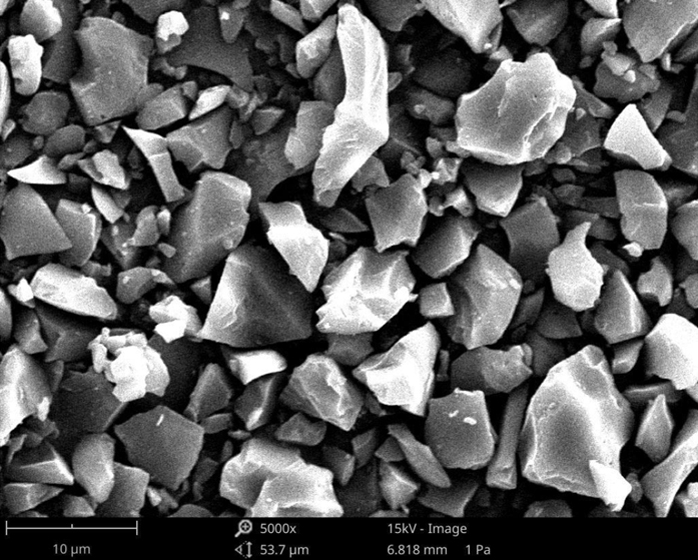
Coal- and asphalt-based hard carbons, produced from coal and pitch through precise control of precursor composition and carbonization processes, have achieved kiloton-scale production. They are widely applicable as anode materials for sodium-ion batteries, in start–stop power systems, low-speed electric vehicles, and energy storage, thereby providing a self-reliant and controllable core material supply to support the industrialization of sodium-ion batteries.
Supercapacitor
They are typically made from porous carbon materials with a high specific surface area, such as activated carbon, carbon nanotubes, or graphene, which provide a large electrode surface area for storing electrical charge.

Sodium storage capacity (mAh/g)
≥220

First-effect (%)
≥88

0.1V Slope Capacity (mAh/g)
≥86

Electrode compaction (g/cm³)
1.00±0.05

D50(μm)
5.0±0.5

Tap Density (g/cm³)
0.90±0.10


Sodium storage capacity (mAh/g)
≥240
First-effect (%)
≥88
0.1V Slope Capacity (mAh/g)
≥82
Electrode compaction (g/cm³)
1.00±0.05
D50(μm)
5.0±0.5
Tap Density (g/cm³)
0.85±0.10
Sodium storage capacity (mAh/g)
≥290
First-effect (%)
≥88
0.1V Slope Capacity (mAh/g)
≥65
Electrode compaction (g/cm³)
1.00±0.05
D50(μm)
5.0±0.5
Tap Density (g/cm³)
0.85±0.10
Sodium storage capacity (mAh/g)
≥295
First-effect (%)
≥90
0.1V Slope Capacity (mAh/g)
≥86
Electrode compaction (g/cm³)
0.90±0.05
D50(μm)
5.0±0.5
Tap Density (g/cm³)
0.80±0.10
Application scenarios

File Download
CONTACT
 400-992-0709
Add:Building 1, Lianchang Technology Port, Changxing, Huzhou, Zhejiang, P.R.China Postcode:313105
Message
WeChat Official Account
carmery.cn Copyright © Carmery New Materials Co., Ltd Powered by www.300.cn